Vasa Maiden Voyage Timeline - What Happened on 10 August 1628
A narrative timeline of Vasa's first and last voyage, from departure to catastrophic sinking.
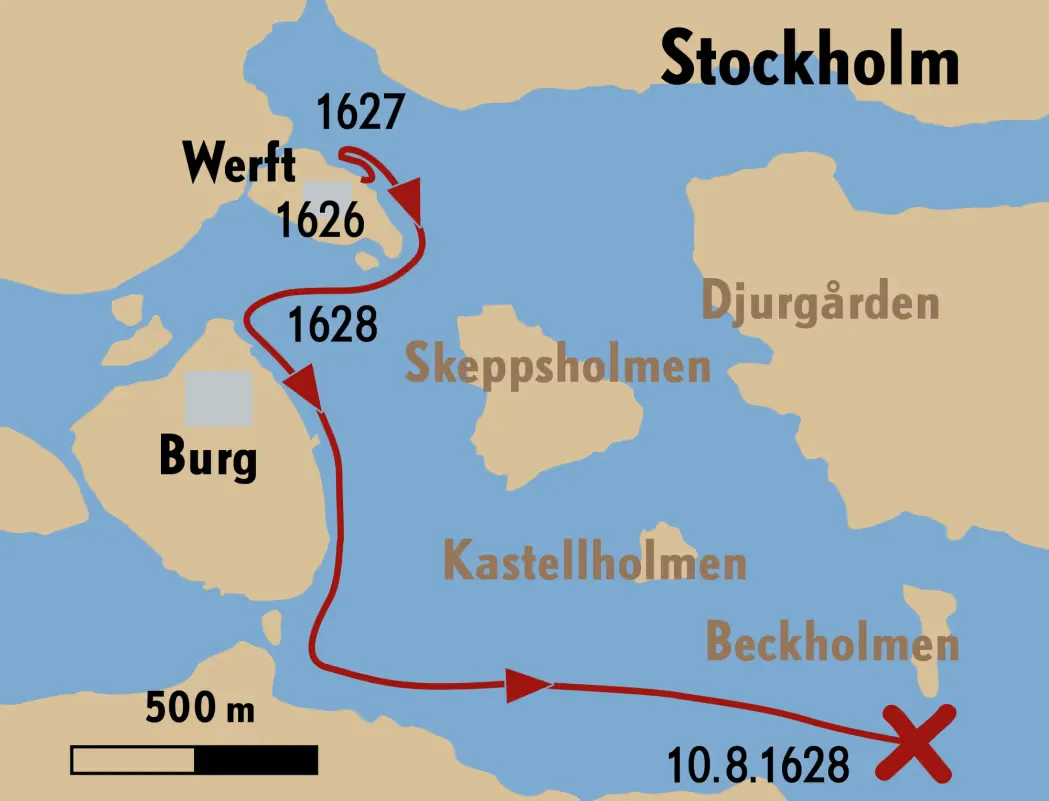
The day began as celebration. Stockholm expected spectacle, not tragedy. Flags moved in the breeze, sailors took position, and Vasa set out under the eyes of a city.
Timeline
1. Departure
Ceremonial launch mood. Public confidence. Royal expectations.
2. Early movement
The ship advanced slowly, looking stable enough inside the harbor route.
3. Wind pressure
Gusts increased. Vasa heeled, recovered, then heeled again.
4. Irreversible moment
Lower gunports met water.
heel -> water ingress -> loss of stability -> capsize
5. Sinking
Within minutes, celebration turned into confusion and fear.
The short voyage became one of the most studied failures in maritime history.
What most visitors miss
The sinking was fast, but the causes were slow: design pressure, timeline urgency, political symbolism, and compromised margins.
Extended Reading Layer
Historical depth
The Vasa story rewards layered reading: technical evidence, political context, and human experience all interact. If you revisit the same gallery or timeline after learning one more detail, the interpretation usually changes.
Practical application
| Visitor goal | Suggested focus |
|---|---|
| Quick orientation | Prioritize one main narrative arc |
| Deeper study | Compare at least two explanatory frameworks |
| Group discussion | Use one claim-evidence-reasoning prompt |
Smart checklist
- Identify one confirmed fact and one debated interpretation.
- Note one design trade-off and one social consequence.
- Write a 3-line summary before leaving the gallery.
[!TIP] The strongest museum visits combine observation, questioning, and synthesis.
Optional reflection prompt
How does this part of the Vasa narrative connect to modern systems where ambition, communication, and risk must be balanced?
A szerzőről

Stockholm Maritime Editor
Ez az utmutato azoknak keszult, akik tobbre vagynak egy gyors fotomegallonál. A Vasa Muzeum jutalmazza a kivancsisagot, es ha kontextussal erkezel, az elmeny egyszeruen emlekezetesebbe valik.
Tags
Comments (0)
Loading comments...