Vasa Restoration Milestones - From Recovery to Museum Display
A phase-by-phase restoration story showing how Vasa moved from salvage to stable display.
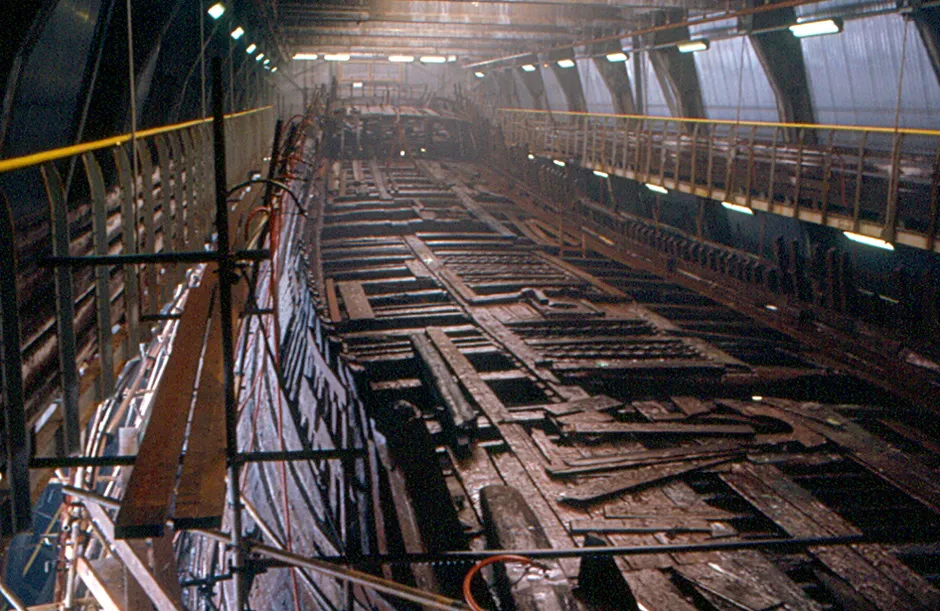
Visitors see one ship. Conservators see phases, thresholds, and risk windows.
| Phase | Priority |
|---|---|
| Immediate post-lift | Prevent rapid degradation |
| Treatment period | Stabilize materials |
| Display integration | Public access with low stress |
| Ongoing monitoring | Detect slow change |
Restoration is not about returning to original condition. It is about extending survival.
Extended Reading Layer
Historical depth
The Vasa story rewards layered reading: technical evidence, political context, and human experience all interact. If you revisit the same gallery or timeline after learning one more detail, the interpretation usually changes.
Practical application
| Visitor goal | Suggested focus |
|---|---|
| Quick orientation | Prioritize one main narrative arc |
| Deeper study | Compare at least two explanatory frameworks |
| Group discussion | Use one claim-evidence-reasoning prompt |
Smart checklist
- Identify one confirmed fact and one debated interpretation.
- Note one design trade-off and one social consequence.
- Write a 3-line summary before leaving the gallery.
[!TIP] The strongest museum visits combine observation, questioning, and synthesis.
Optional reflection prompt
How does this part of the Vasa narrative connect to modern systems where ambition, communication, and risk must be balanced?
著者について

Stockholm Maritime Editor
このガイドは、写真を撮って終わるだけでは物足りない旅行者のために書かれています。ヴァーサ博物館は、背景を知ったぶんだけ深く応えてくれる場所です。
Tags
Comments (0)
Loading comments...